
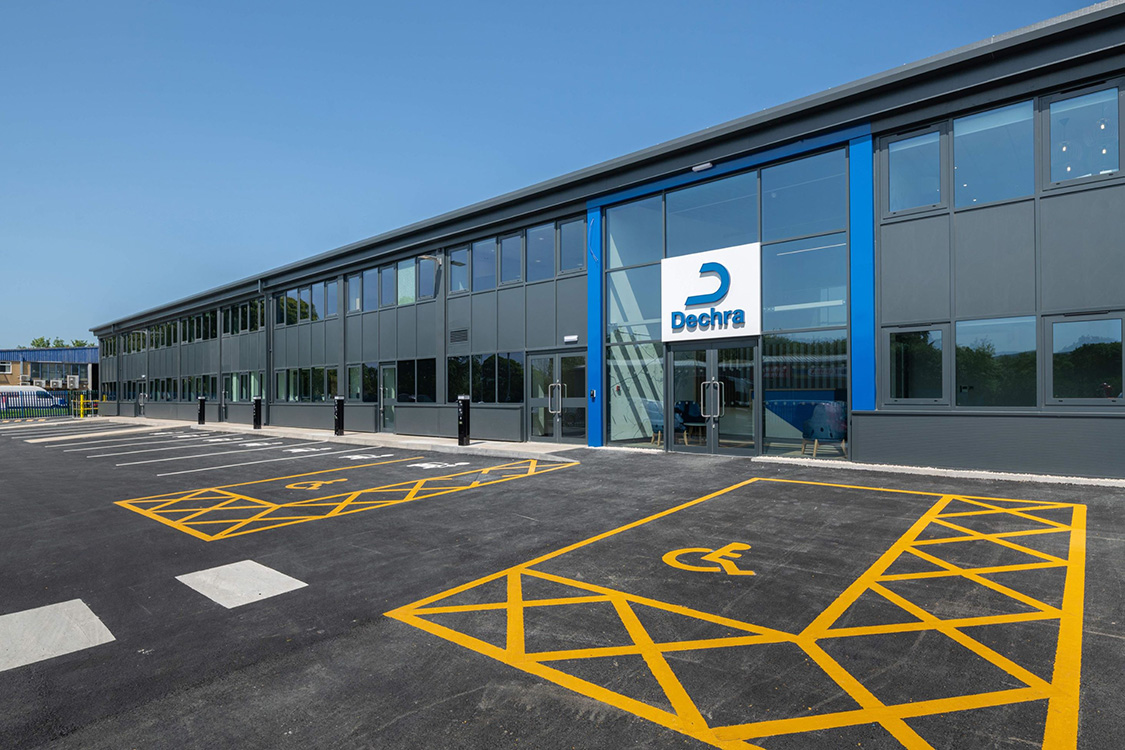
For nearly two decades, veterinarians reaching for an injectable antiemetic had one approved choice. That changed this year, as Dechra’s Emeprev, the first FDA-approved generic version of Zoetis’s Cerenia injectable, reached distributor shelves with a different preservative that the company says makes the injection less painful.
Emeprev contains maropitant citrate, the same active ingredient as Cerenia, at the same 10 mg/mL strength. The FDA approved it in December 2025 under an abbreviated new animal drug application, the pathway used for generic animal drugs, after Dechra showed it was bioequivalent to the original product. The company said at the time that it expected the drug to be available through major veterinary distributors in early 2026.
Cerenia was first launched in the United States in 2007 by Pfizer Animal Health, which later became Zoetis. It was the first drug approved specifically to prevent and treat vomiting in dogs, and it has since become one of the most commonly used medications in small animal practice. Several companies already sell generic maropitant tablets, but until Emeprev, Cerenia was the only approved injectable form.
A different preservative
The main difference between the two products is the preservative. Cerenia injectable uses metacresol, while Emeprev uses benzyl alcohol, which Dechra says acts as a local anesthetic at the injection site. Pain on injection has long been one of the most familiar complaints about Cerenia, and pain or vocalization at the time of injection is the most frequently reported adverse event for injectable maropitant in dogs since it reached the market, according to post-approval reports summarized on the label.
Dechra’s claim rests on a 2018 study published in Veterinary Record Open, which compared the two preservative formulations in 32 healthy laboratory beagles. The study was blinded, randomized and used a crossover design, meaning each dog received both products. Veterinarians who did not know which product was given scored each dog’s pain response, and the benzyl alcohol formulation was significantly less painful at both room temperature and refrigerated temperature. The study used Prevomax, a product Dechra sells in Europe that the company says has an identical formulation to Emeprev.
Dr. Christopher Byers, a veterinary emergency and internal medicine specialist whom Dechra describes as one of its key opinion leaders, called the product “a win for our patients and their caregivers” in the company’s announcement.
Emeprev’s label, however, still lists pain and vocalization on injection as a common side effect, and it still notes that using refrigerated product may reduce the pain response. Because generic drugs are approved based on the original product’s safety and effectiveness data, much of the label’s clinical information is carried over from studies of the original formulation.
Storage, dosing and price
Emeprev does not need to be refrigerated. According to its label, it can be stored at or below 86 degrees Fahrenheit, and an opened vial should be used within 90 days and punctured no more than 25 times. It comes in a 20 mL amber glass vial.
Dosing matches Cerenia at 1 mg/kg once daily for up to five days. It is labeled for subcutaneous use in puppies 2 to 4 months old, and for subcutaneous or intravenous use in older dogs and in cats 4 months and older. As with Cerenia, its safety has not been evaluated in animals with gastrointestinal obstruction or those that have ingested toxins, and it should be used with caution in patients with liver disease.
Dechra has not published a list price, and what clinics pay varies by distributor and purchasing agreement. Retail listings give a rough sense of the gap. One online pharmacy lists a 20 mL vial of Emeprev at $275, while another online retailer lists the same size of Cerenia injectable at about $353.
Analysis: Worth switching?
By Dr. Andrew Rocco
Anyone who has given Cerenia to a cat knows why this matters. The drug works well, but the injection stings enough that plenty of patients, especially cats, react badly to it, and a painful stick at the start of a visit can make the rest of the exam and treatment harder for the patient and the team. Over the years, clinics have developed workarounds like keeping vials in the refrigerator or giving the drug IV when a catheter is already in place, but a formulation that simply hurts less would be a real improvement.
The evidence behind that promise is encouraging but limited. The key study used 32 healthy beagles, not sick patients, and it didn’t include cats, which are the patients where injection pain tends to be the biggest problem. It’s also worth noting that Emeprev’s own label still warns about injection pain. None of that means the claim is wrong, since the study design was solid and the result was significant, but practices should treat it as a promising early finding rather than a settled one. Real-world experience from clinics using both products will tell us much more over the next year.
The price difference is the easier part of the decision. Maropitant is one of the most frequently used injectable drugs in general and emergency practice, and even a modest savings per vial adds up quickly over a year. For practices that pass those savings along, it could also make a small difference for clients who are already stretched by the cost of a vomiting pet’s workup.
There are a few practical things to consider before switching. Check your actual distributor pricing, since the retail numbers above won’t match what clinics pay. Make sure your team knows the vial limits of 90 days and 25 punctures, and think about whether that affects how you stock it in busy areas like treatment or triage. And if your hospital refrigerates Cerenia to reduce the sting, it may be worth continuing to refrigerate Emeprev too, since its label still suggests cold product may help.
More broadly, it’s good to see competition finally reach one of the most-used drugs in companion animal medicine. Generics have been part of human medicine for decades, and they tend to lower prices and push the original manufacturers to improve. If Emeprev lives up to its promise, the biggest winners may be the cats who will no longer dread that particular injection. The Differential would like to hear from practices that have tried both products about what their teams are seeing.
Disclosure: This article was not sponsored, paid for or reviewed by Dechra, Zoetis or any other company mentioned. The Differential received no compensation or free product in connection with this story, and no company had any input on its content.
Sources: Dechra news release (Dec. 8, 2025); Emeprev prescribing information via DailyMed; dvm360 (Dec. 8, 2025); AAHA Trends (Dec. 9, 2025); Pfizer Animal Health news release (July 30, 2007); Deckers N, et al. Comparison of pain response after subcutaneous injection of two maropitant formulations to beagle dogs. Veterinary Record Open. 2018;5(1):e000262. Retail prices from HealthWarehouse and A to Z Vet Supply, accessed Sept. 23, 2026.
